
Power Resistors for Industrial Applications
Widap provides power resistors for industrial, energy and railway applications. The product range extends from compact wirewound resistors starting at approximately 5 watts to high-power resistors and customized resistor assemblies in the kilowatt to megawatt range.
The portfolio includes open wirewound, cement-coated and vitreous enamel resistors as well as power resistors in ceramic or aluminium housings. For high-power applications and demanding load profiles, Widap also develops grid resistors, resistor units and complete customized assemblies.
In addition to a broad range of standard products, Widap supports its customers with the electrical, thermal and mechanical design of the appropriate power resistor.
- Standard products and customized designs
- Solutions for continuous, short-time and pulse operation
- Different designs, connections and protection classes
- echnical consulting and support with resistor dimensioning

What Are Power Resistors?
A power resistor is an electrical component designed to absorb higher levels of electrical power and convert this energy into heat in a controlled manner. Power resistors are used to limit current, dissipate electrical energy, damp voltage peaks or provide a defined electrical load.
Unlike conventional electronic resistors, power resistors are designed for higher temperatures, higher currents and more demanding load profiles. Depending on the application, they may be continuously loaded or required to absorb a large amount of energy during a short pulse.
Selecting the right resistor therefore depends on more than just resistance value and rated power. Important parameters also include:
- Duration and shape of the load
- Pulse energy and repetition rate
- Rated and peak voltage
- Cooling and ambient temperature
- Mounting position and available installation space
- Insulation, protection class and environmental conditions
Typical applications include frequency converters, inverters, battery energy storage systems, electric drives, power systems, test systems, machinery and rail vehicles.
Types of Power Resistors
Widap offers various resistor technologies and designs. The appropriate solution depends on the electrical load, load profile, available installation space and required heat dissipation.
Open winding wirewound resistors
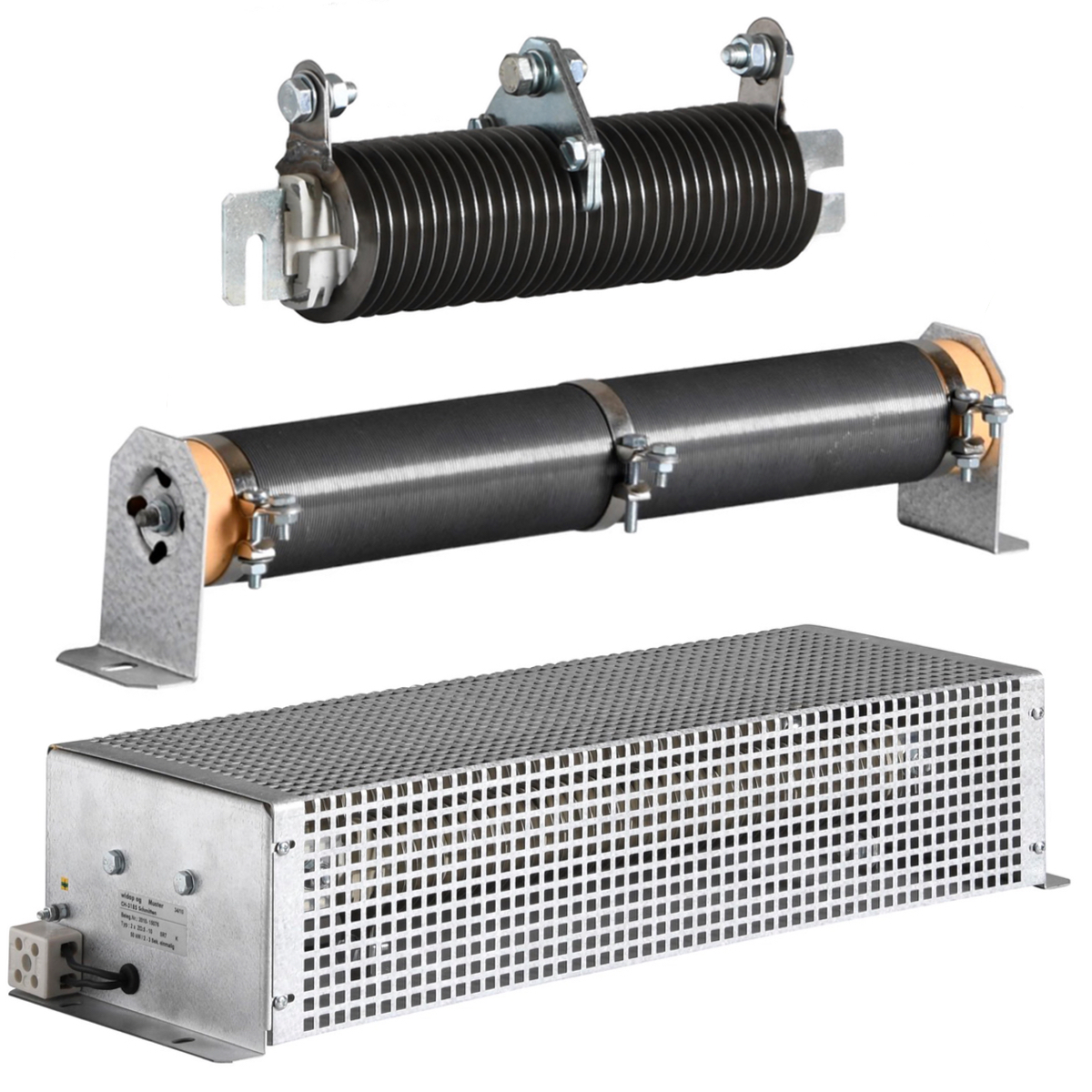
Open wirewound resistors provide direct heat dissipation and are suitable for high power levels, elevated temperatures and short-time overloads. Different designs, connections and taps allow flexible adaptation to industrial applications.
Cement-coated wirewound resistors
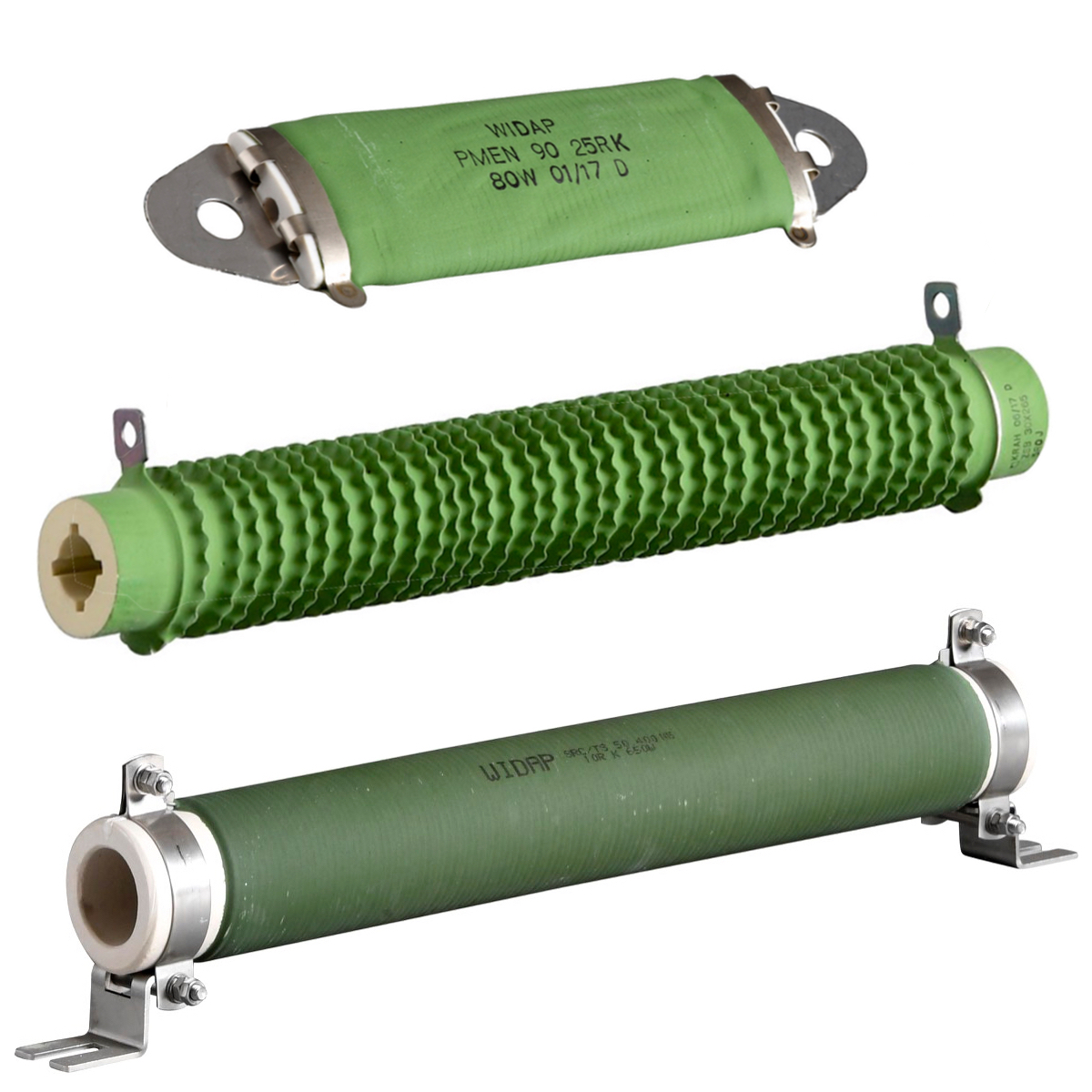
Cement-coated wirewound resistors are robust, cost-effective and suitable for both continuous and pulse loads. They are available in a wide range of power ratings, resistance values and sizes.
Vitreous enamelled wirewound resistors
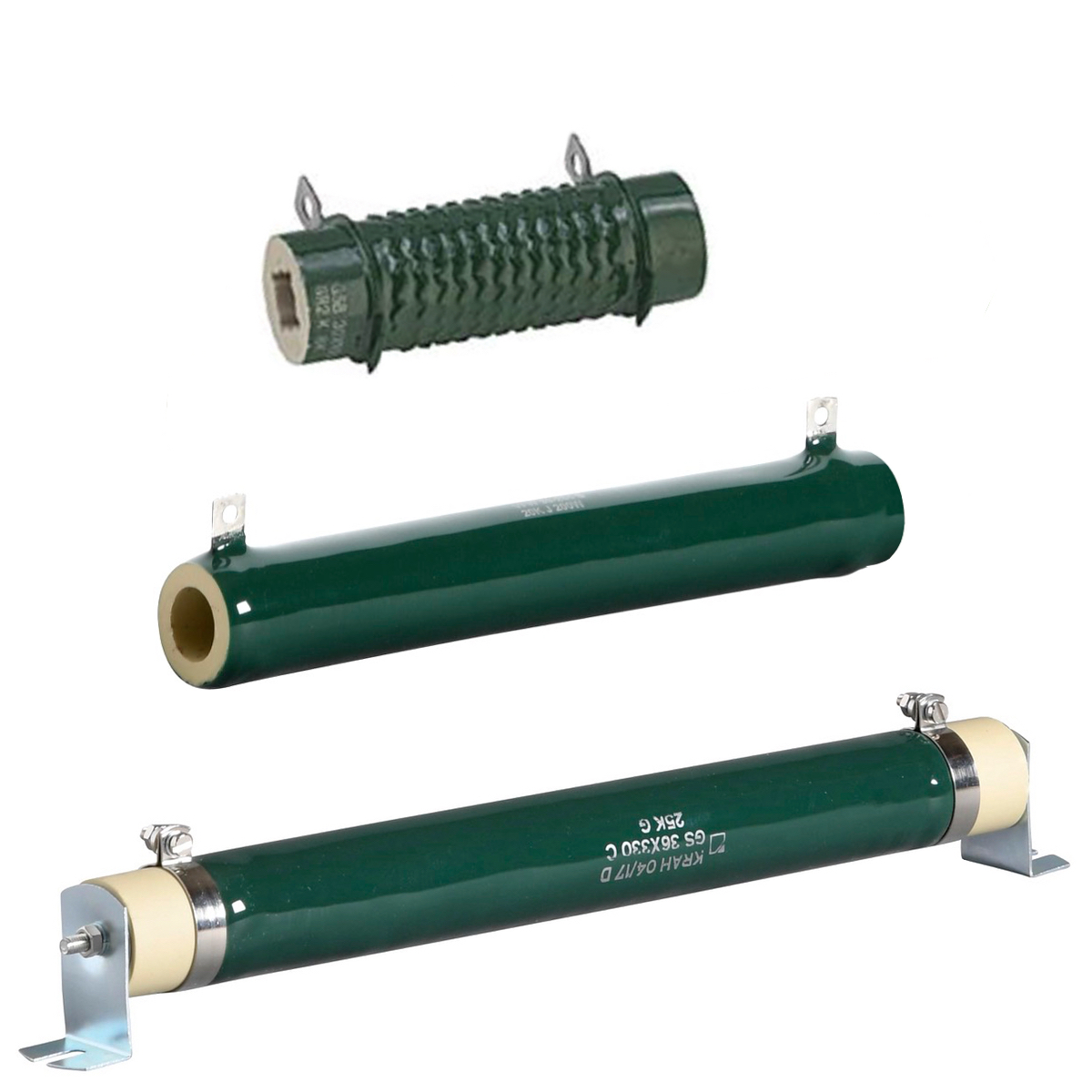
Vitreous enamelled wirewound resistors feature a temperature-resistant protective coating and provide excellent resistance to environmental influences. They are used in industrial equipment, power systems and filter circuits, among other applications.
Aluminium-housed power resistors
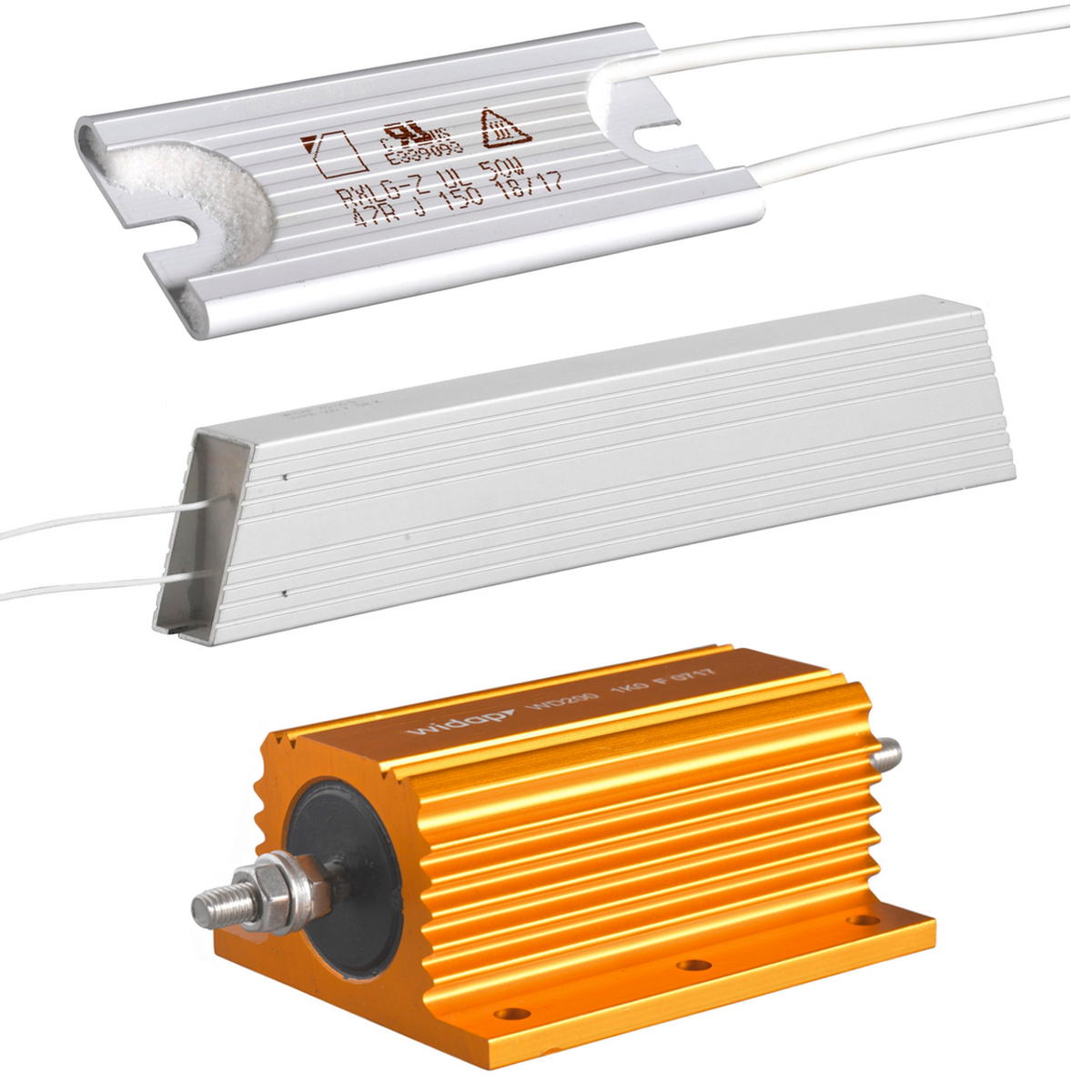
Aluminium-housed power resistors combine high power density with compact dimensions and efficient thermal connection to a suitable cooling surface. They are particularly suitable as precharge, discharge, braking, protection and snubber resistors.
Silicone-coated wirewound resistors
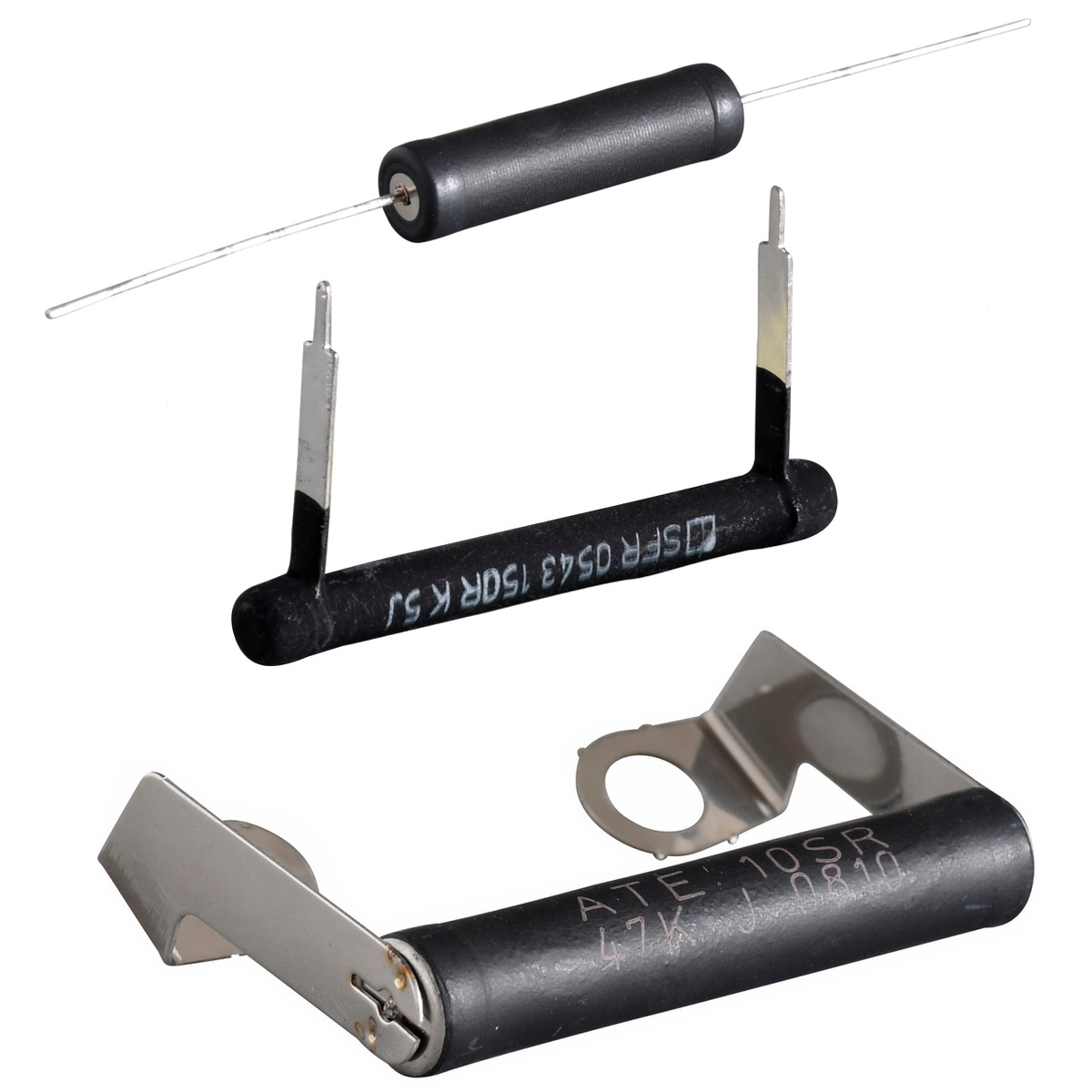
Silicone-coated wirewound resistors combine compact dimensions with high load capacity and reliable heat dissipation. They are suitable for industrial equipment, power supplies and power electronics applications.
Ceramic-housed wirewound resistors
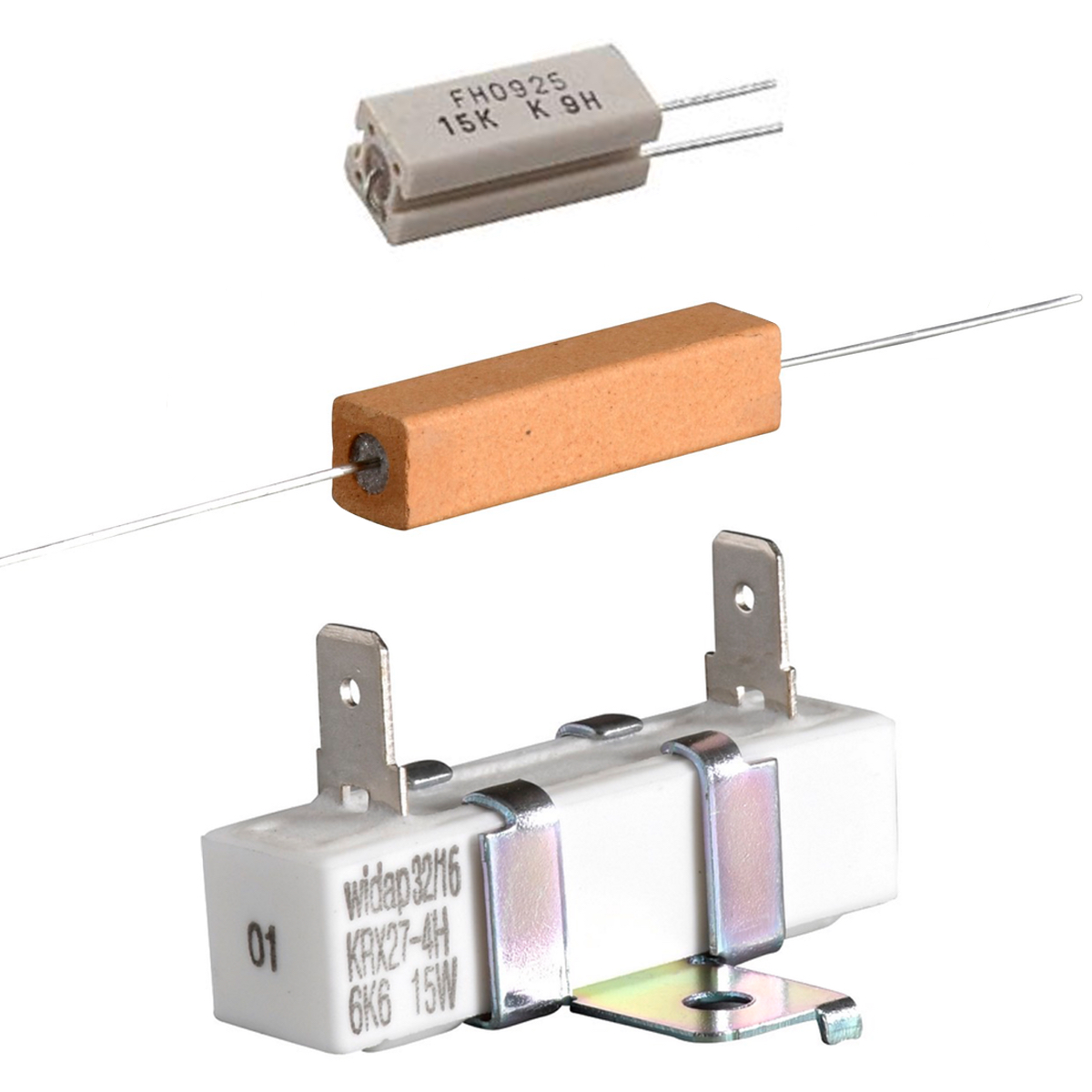
Ceramic-housed wirewound resistors are electrically insulated, mechanically protected and compact in design. Typical applications include control systems, power supplies, electrical equipment and industrial circuits.
Cast iron and steel grid resistors
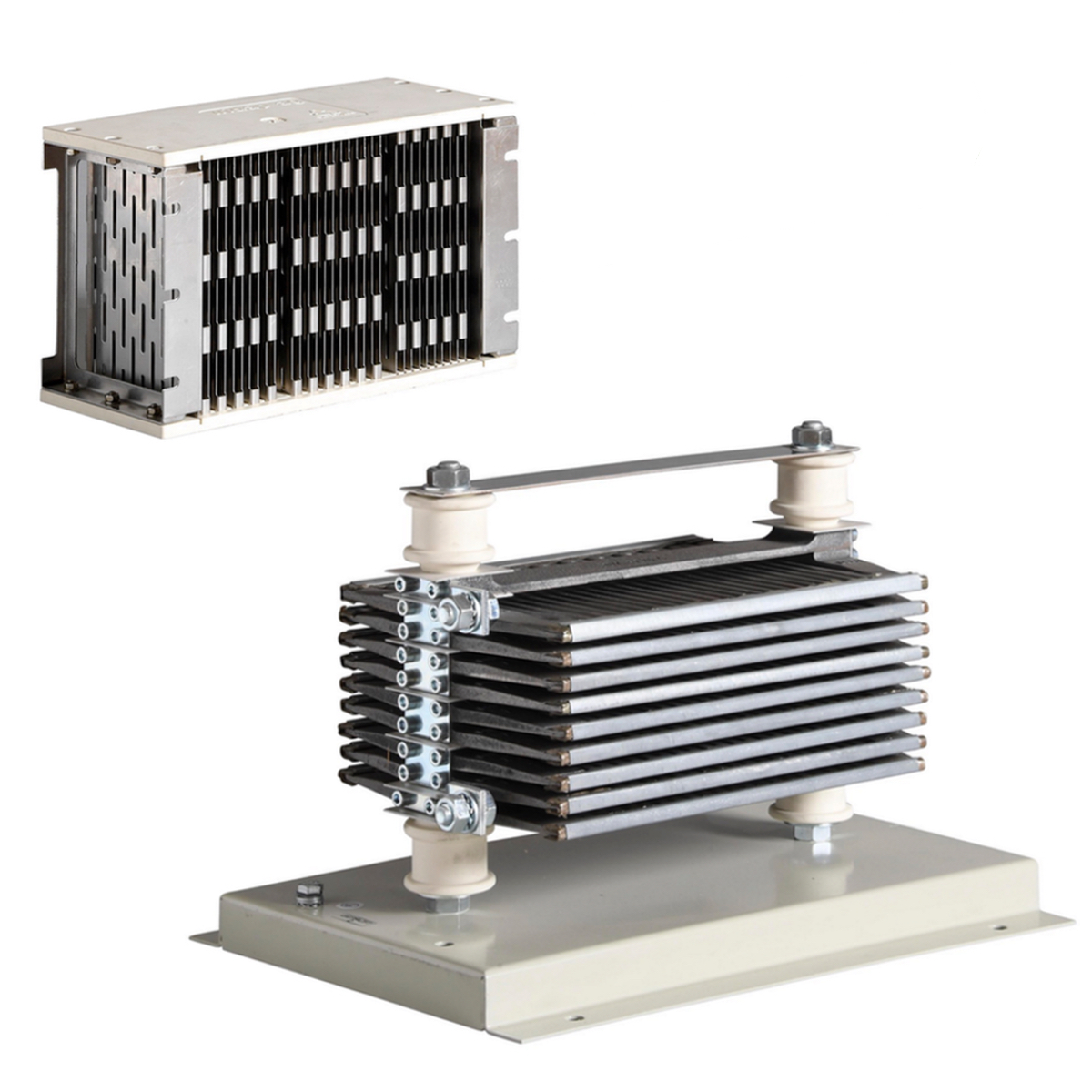
Cast iron and steel grid resistors are designed for high power levels and demanding industrial load profiles. They are used as braking, starting, grounding, load and test resistors, among other applications.
Special resistors and resistor assemblies
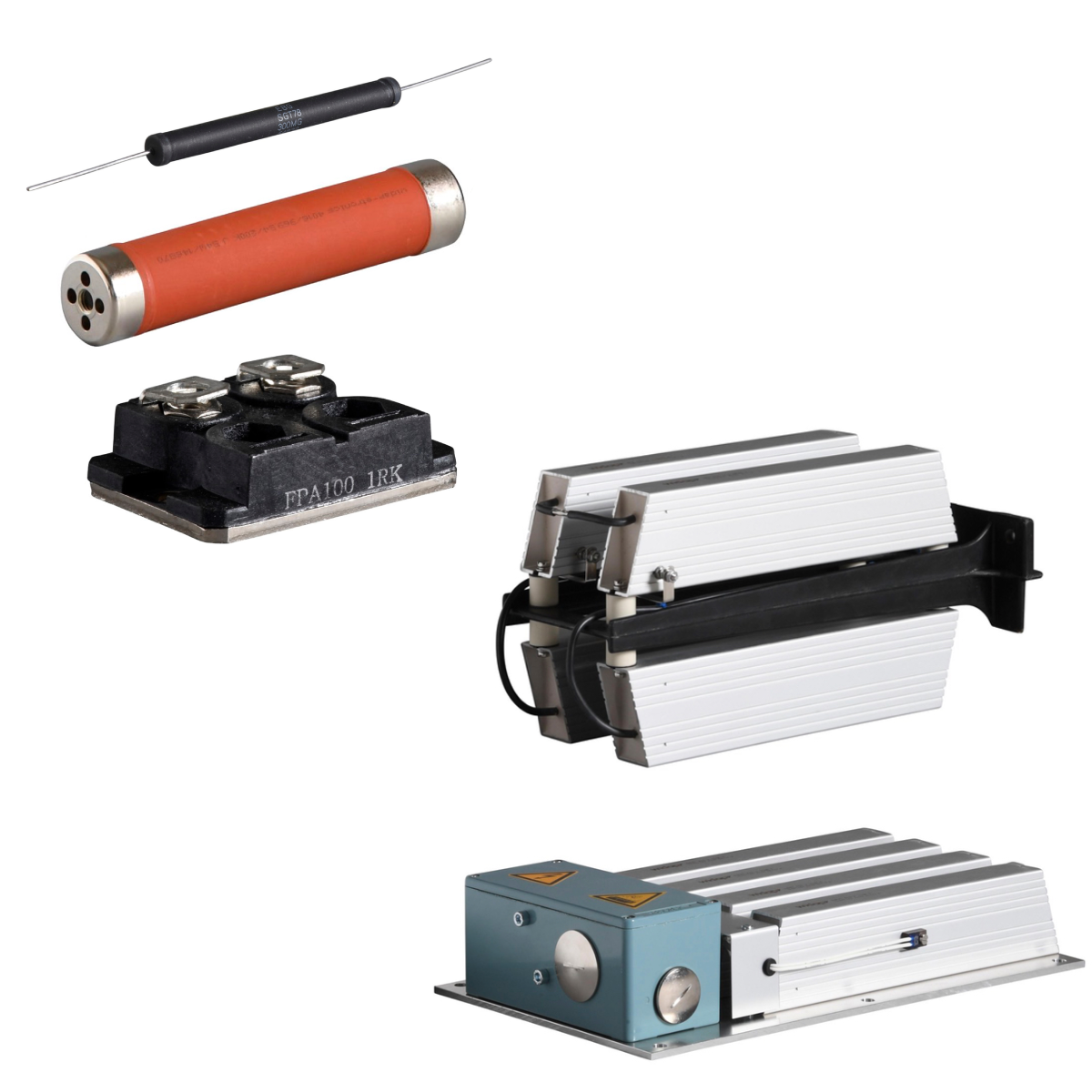
Widap develops customized power, precision and high-voltage resistors as well as complete resistor assemblies. Applications include medical technology, high-voltage measurement systems, test equipment and industrial high-voltage systems.
Wirewound potentiometers
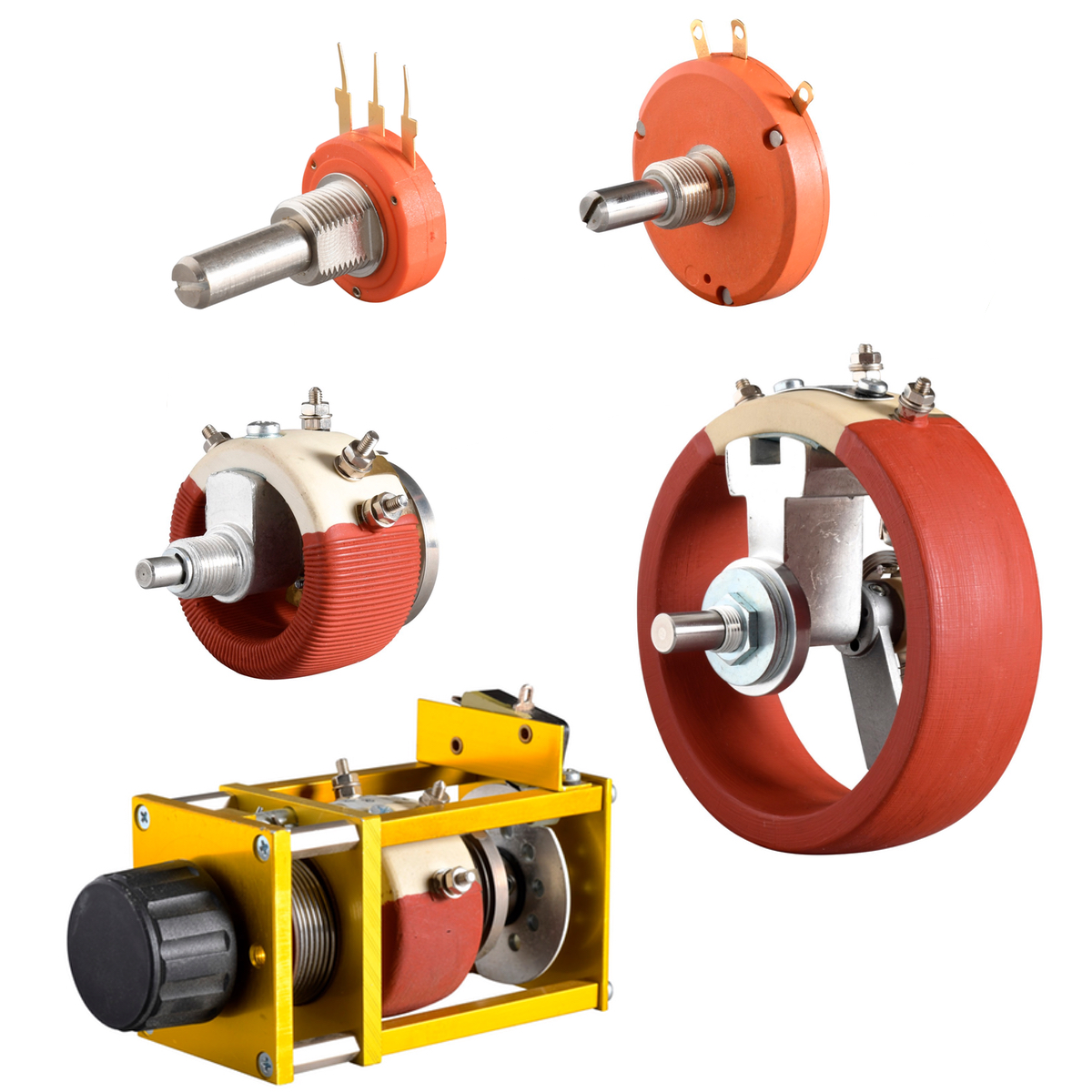
Wirewound potentiometers are adjustable wirewound resistors for industrial control, regulation, measurement and testing applications. Widap offers various sizes and customized designs.
Applications of Power Resistors
Power resistors perform a wide range of functions in electrical systems. They limit currents, absorb excess energy, protect power electronics and enable controlled operating and test conditions.
The following applications are among the most important uses of Widap power resistors.
Precharge Resistors
Precharge resistors limit inrush current when charging capacitors and DC links. This protects contactors, fuses, capacitors and power electronics from excessive current peaks.
Typical applications include:
- Battery energy storage systems and BESS
- Frequency converters
- Solar and wind power inverters
- Electric and hybrid vehicles
- Electric commercial vehicles
- On-board chargers
- Battery chargers and DC charging stations
- UPS systems
- Industrial power supplies
Depending on the application, the precharge resistor must absorb a high amount of energy for a short period and then be able to cool down sufficiently.
Discharge Resistors
Discharge resistors dissipate the energy stored in capacitors and DC links in a controlled manner after shutdown. This allows hazardous residual voltages to be reduced within a defined period of time.
Discharge resistors are used in applications such as:
- Battery energy storage systems
- Frequency converters
- Inverters
- Battery chargers
- Electric vehicles
- UPS systems
- Capacitor banks
- Industrial power supplies
- Solar and wind power systems
- Traction converters
Depending on the system, discharge may take place continuously via a bleeder resistor or selectively via an active discharge circuit.
Braking Resistors
Braking resistors absorb the regenerative energy generated when an electric drive decelerates and convert it into heat. This prevents excessive DC-link voltage and enables controlled braking.
Typical applications include:
- Frequency converters
- Machine tools
- Cranes and hoists
- Elevators
- Conveyor systems
- Automated storage and retrieval systems
- Centrifuges
- Winding machines
- Wind turbines
- Industrial electric vehicles
- Mining and port vehicles
- Marine drives
- Rail vehicles
Braking energy, peak power, cooling, duty cycle and the time between braking cycles are particularly important when dimensioning a braking resistor.
Filter and damping resistors reduce unwanted oscillations, resonances, harmonics and voltage peaks. They are used as part of RC, RL or RLC circuits.
Typical applications include:
- Frequency converters
- Solar inverters
- Wind power systems
- Battery energy storage systems
- Grid converters
- Harmonic filters
- Low- and medium-voltage systems
- Power distribution systems
- STATCOM and SVC systems
- Traction converters
- Industrial power supplies
Depending on the circuit, high voltage withstand capability, low inductance or particularly high pulse-load capability may be required.
Grounding and neutral grounding resistors limit the fault current that occurs during a ground fault to a defined value. This can reduce damage to electrical systems and allow faults to be reliably detected by the installed protection systems.
Typical applications include:
- Generator neutral points
- Transformer neutral points
- Industrial medium-voltage networks
- Power plants
- Wind and solar farms
- Battery energy storage installations
- Data centres
- Mining
- Process industries
- Marine and offshore installations
- Railway infrastructure
Depending on the application, these resistors are also referred to as neutral grounding resistors, neutral earthing resistors or NGRs.
Load and test resistors simulate a defined electrical load. They enable the testing of energy sources, power supplies and power electronic systems.
Typical applications include:
- Battery and accumulator testing
- Battery energy storage systems and BESS
- UPS systems
- Generators and emergency power systems
- Inverters
- Power supplies
- Fuel cells
- Battery chargers
- Vehicle and railway technology
- Production test benches
- Research and development
- Data centres
Individual load resistors can be integrated into customer equipment and test setups. For complete switchable or controllable test systems, Widap develops customized load banks.
Protection, snubber and circuit resistors damp switching overvoltages and limit high current or voltage peaks. They protect IGBTs, thyristors, MOSFETs and other power electronic components.
Typical applications include:
- RC and RCD snubbers
- Crowbar circuits
- Overvoltage limitation
- Inverters
- Frequency converters
- Battery energy storage systems
- Battery chargers
- Solar and wind power systems
- Industrial power supplies
- Electrolysers and fuel cell systems
- Traction converters
Depending on the circuit, high pulse-load capability, low inductance and high voltage withstand capability may be required.
Starting and Current-Limiting Resistors
Starting resistors limit the current when an electric motor is started and can influence the available starting torque. They are used in particular with DC motors and wound-rotor induction motors.
Typical applications include:
- Cranes
- Conveyor systems
- Pumps
- Rolling mills
- Crushing equipment
- Mining machinery
- Heavy-duty industrial drives
The design depends on starting current, starting time, number of starts and the intervals between load cycles.
Railway applications combine several different resistor functions. These include braking, filter, protection, discharge, VLU, heating and other special-purpose resistors.
In addition to the electrical load profile, railway-specific requirements must be considered, including:
- Limited installation space
- Roof or underfloor mounting
- Natural or forced-air cooling
- High vibration and shock loads
- Temperature and weather exposure
- Specific fire protection requirements
- Project-specific testing and approvals
As Widap provides not only resistors but also heating systems and other components for railway applications, railway technology forms a dedicated area of expertise within the Widap portfolio.
Correct Dimensioning of Power Resistors
A power resistor should not be selected solely on the basis of its resistance value and rated power. Reliable dimensioning requires consideration of the complete load profile as well as the electrical, thermal and mechanical operating conditions.
Electrical Requirements
The most important electrical parameters include:
- Rated resistance
- Minimum resistance in cold condition
- Maximum resistance in hot condition
- Required tolerance
- Temperature coefficient
- DC or AC voltage
- Rated and peak voltage
- Insulation and test voltage
- Maximum permissible inductance
Load Profile
A power resistor may be subjected to continuous load, a single pulse or recurring pulses.
For pulse applications, the following information should be provided whenever possible:
- Energy per pulse
- Peak power
- Peak current or peak voltage
- Pulse duration
- Pulse shape
- Number of repetitions
- Time between pulses
- Repetition frequency
A load diagram, measurement curve or circuit diagram facilitates technical evaluation.
Cooling and Environmental Conditions
The permissible load capacity of a power resistor is significantly influenced by heat dissipation and the prevailing environmental conditions. The cooling concept, installation conditions and temperature limits should therefore be considered during the design stage.
Important factors include:
- Natural or forced-air cooling
- Heat-sink mounting
- Water or oil cooling
- Ambient temperature
- Maximum permissible surface temperature
- Air circulation and installation position
- Indoor or outdoor installation
- Humidity and contamination
- Required protection class
- Special environmental conditions such as dust, vibration or corrosive atmospheres
Mechanical Design
The following information is required for the mechanical design, among other parameters:
- Available length, width and height
- Required design
- Mounting method
- Installation position
- Electrical connections
- Protection class
- Environmental conditions
- Applicable standards
Depending on the current level, connections can be made using terminals, studs, copper busbars, cables or connectors.
Not all parameters available yet? Send us a circuit diagram, load profile or description of your application. Our specialists will support you in determining the required design data.
Standard Product or Customized Resistor Solution?
Many applications can be realized using a power resistor from Widap’s standard product range. Different designs, resistance values, power ratings and connection options are available. If a standard product does not meet the requirements, Widap develops a customized solution.
Parameters that can be customized include:
- Resistance value and tolerance
- Continuous and pulse-load capability
- Operating voltage and insulation
- Design and dimensions
- Mounting and connections
- Housing and protection class
- Cooling
- Temperature monitoring
- Low-inductance design
The result may be an individual power resistor, a ready-to-connect resistor assembly or a complete project-specific solution.
Why Choose Widap Power Resistors?
Widap combines a broad range of standard resistors with technical consulting and customized development.
Broad Resistor Portfolio
Various resistor technologies and designs make it possible to select the appropriate solution for different power levels, load profiles and environmental conditions.
Standard and Customized Solutions
In addition to standard products, Widap develops customized resistors and complete resistor assemblies.
Technical Dimensioning
Widap supports customers in evaluating resistance value, power, pulse energy, cooling, insulation and installation conditions.
Experience in Demanding Applications
Widap resistor solutions are used in demanding industrial, energy, automation and railway applications.
International Group and Resilient Supply Chain
In addition to its headquarters in Switzerland, Widap has an international presence through its subsidiary SIR Resistor Italia Srl in Italy and manufacturing capabilities in Asia. Short supply routes, flexible sourcing and a resilient supply chain enable reliable delivery to our customers.
Frequently Asked Questions About Power Resistors (FAQ)
How Is the Power of a Resistor Calculated?
For a constant electrical load, power can generally be calculated using the following formulas:
P = U × I
P = I² × R
P = U² ÷ R
When selecting an actual resistor, load duration, cooling, ambient temperature and appropriate safety margins must also be taken into account.
What Is the Difference Between Continuous Power and Pulse Power?
Continuous power can be absorbed over an extended period of time. Pulse power occurs only for a short duration and can be significantly higher.
The key factors are the absorbed energy, pulse duration, repetition rate and cooling time.
When Is an Aluminium-Housed Power Resistor Suitable?
An aluminium-housed resistor is particularly suitable where installation space is limited and a suitable cooling surface is available.
Thermal connection to an appropriate heat sink enables high power density.
Can Power Resistors Be Customized?
Yes. Resistance value, power rating, design, connections, mounting, cooling, protection class and other characteristics can be adapted to the specific application.
What Information Does Widap Need for an Enquiry?
The most useful information includes resistance value, voltage, continuous power, pulse energy, load duration, repetition rate, cooling, ambient temperature and available installation space.
If not all values are known yet, Widap can support you with the technical clarification.
Find the Right Power Resistor
Do you need a standard power resistor or a customized resistor solution?
Send us your technical requirements. Widap will support you in selecting and dimensioning a reliable and cost-effective solution.